
HOW TO HIT UPHILL AND DOWNHILL GOLF SHOTS

Uphill Golf Shot, Uphill Golf Lie

Uphill Lie, Golf Genie Tee to Green Pocket Guide, Page 30

Uphill Golf Shot

The uphill golf shot can be one of trickier golf shots.  However, with the proper setup, the uphill golf shot can be handled quite easily. Here are a couple of quick golf tips to successfully execute the uphill golf shot every time.

When faced with an uphill lie, you should first align your shoulders, hips and knees with the slope.  A key swing thought is to “swing the club with the slope.”

With respect to ball position, on uphill golf shots you should line up where the golf ball is posited closer to the higher foot.  If you are a right handed golfer, the golf ball position should be closer to your left foot.

For uphill golf shots, use a less lofted club.  The uphill golf shot promotes a higher trajectory and shorter distance.  So if you are 140 yards to the hole and would typically use your 8-iron for a 140 yard shot, use a 7 iron for the same distance if the ball lies on an uphill slope.

Throughout the swing, keep most of your weight on the back foot (right foot for a right handed golfer).  If you try to “transfer your weight” like you would for a normal golf swing, you are bound to hit the turf first before you strike the ball with an uphill golf shot.

Finally, ensure that you swing along the slope.

Downhill Lie, Golf Downhill Lie, How to Hit a Downhill Lie

Downhill Lie, Golf Genie Tee to Green Pocket Guide, Page 31

Downhill Golf Shot

The downhill golf shot can be even trickier than an uphill golf shot. But like the uphill golf shot, the downhill golf shot is much easier if you set up properly.  Here are a couple of quick golf tips to successfully execute the downhill golf shot.

Similar to the uphill golf shot, when faced with a downhill lie, you should first align your shoulders, hips and knees with the slope.  A key swing thought is to “swing the club with the slope.”

With respect to ball position, on downhill golf shots you should again line up where the golf ball is posited closer to the higher foot.  But in this instance, since you are performing a downhill golf shot, your higher foot is your right foot.  So, if you are a right handed golfer, ensure that the golf ball is positioned closer to your right foot.

For downhill golf shots, use a more lofted club.  The downhill golf shot promotes a lower trajectory and more  distance.  So if you are 140 yards to the hole and would typically use your 8-iron for a 140 yard shot, use a 9 iron for the same distance if the ball lies on a downhill slope.

Throughout the swing, keep most of your weight on the front foot (left foot for a right handed golfer).  If you try to “transfer your weight” like you would for a normal golf swing, you are bound to either hit the turf first before the ball or hit the golf ball “thin” with a downhill golf shot.

Finally, ensure that you swing along the slope.

Posted in Full Swing Tips | Tagged , , , , , , , , , , , , , , , , , , , , , , , | Comments Off

BEST WAY TO GRIP A GOLF CLUB

Proper grip, basic golf grip, how to grip a golf club

Practice Drills Pocket Guide: Proper Golf Grip Basics

A proper golf swing begins with the correct grip.  Though many golfers (both good and bad) have adapted a particular golf grip that matches their playing style, it is amazing how many golfers do not understand the correct mechanics of the golf grip and how both a proper and improper grip can affect the outcome of your golf shots.

Based on input and expertise from well respected PGA teaching pros, here is a step by step checklist of proper golf grip basics for right handed golfers.  Note that these instructions are for a “neutral golf grip.”

Left Hand

  1. Place golf grip across base of little finger and just above first joint of index finger.
  2. Apply pressure to the golf grip with the last 3 fingers of left hand.
  3. Fold your thumb and pad of left hand over the golf grip, ensuring the pad of your left hand palm is on top of the grip
  4. Place your left hand thumb just right of the center of the shaft.

Right Hand

  1. Keeping your left hand properly placed on the golf grip, place the golf grip across base of the fingers of the right hand.
  2. Wrap your right hand fingers around underside of golf grip.
  3. Fold lifeline of right hand over left thumb.
  4. Right hand pressure should be applied by the middle 2 fingers.

Key Checkpoints of Proper Golf Grip

  • Palms should always face each other when applied on the golf grip.
  • When looking down at grip, knuckles of the left hand forefinger and middle finger should be visible while the creases of thumbs and forefingers point between right side of face and right shoulder.
  • Throughout the golf swing, the hands should work together as one unit with neither dominating the other.

When to Alter Your Golf Grip

  • Use a “neutral golf grip” for the majority of your shots.  A neutral golf grip results in a square clubface at impact.
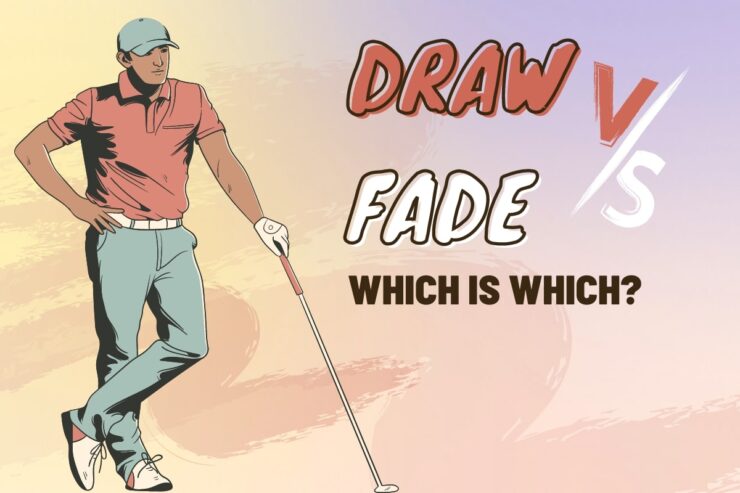
  • For “fade” shots where you want to curve the golf ball slightly from left to right around an obstacle, use a “weak” golf grip by rotating your hands to the left on the golf grip which opens your clubface.
  • For “draw” shots where you want to curve the golf ball slightly from right to left around an obstacle, use a “strong” golf grip by rotating your hands to the right on the golf grip which closes your clubface.
Posted in Full Swing Tips | Tagged , , , , , , , , , , , , , , , , , , | Comments Off

How to choose a golf training aid

training aid

The best golf training aids are those that help you commit the RIGHT golf swing movements to muscle memory and do not ingrain poor golf swing habits.  Given golf’s complexity, the more simple the golf training aid the better.

The purpose of this post is not to recommend a particular golf training aid (there are way too many golf training aids to discuss and most simply do not work) but discuss the key categories of golf training aids you should consider and evaluate with help from your golf instructor.

The Grip – a proper golf swing begins with the grip.  Consider a golf training aid that helps you establish the proper grip while placing and aligning your right and left hand on the grip in the correct positions.

Golf Swing Alignment – You can have a perfect golf swing, but will always miss your target if not aligned properly. You can always use you golf clubs as alignment aids on the practice range, but there are a host of golf training aids such as “alignment sticks” on the market that are inexpensive and can be used for other purposes from checking your swing plane to guiding your putting stroke.

Impact – One of the best golf training aids you can invest in is what is known as an “impact bag.”  There are many different manufacturers of impact bags, but they all serve the same purpose – to help ingrain the proper feel and ensure proper wrist position at impact.

Putting Alignment – A solid swing path and stroke will go a long way to reduce your putts per round.  Consider the various putting alignment golf training aids on the market that help ensure proper putting setup and stroke fundamentals.

Swing Synchronization – Ensuring that your torso, shoulders and arms move together in unison are a key aspect of a solid golf swing.  There are many golf training aids on the market that can help with this, but avoid the complicated ones.  Select a golf training aid the helps keep your elbows together and keeps your swing in sync through the golf swing.

Golf Swing Fundamentals – The last category of golf training aids is not a golf training aid per se, but golf instruction that reinforces your PGA teaching pro’s lessons.  There are a host of “golf pocket guides” on the market that provide expert golf tips on proper golf shot setup and execution.  These guides are very handy on or off the course when your golf instructor is not around.  Be sure to get one that is credible, durable and easy to understand.

Along with regular practice and feedback from you teaching professional, these are really the major golf training aids you should consider to groove a solid golf swing and reinforce golf fundamentals.

Posted in Golf Equipment | Tagged , , , , , , , , , , , , , , , , | Comments Off

HOW TO IMPROVE YOUR GOLF SWING

Improving your golf swing is a systematic process that can take some time.  However, if you follow these golf swing tips, you will be sure to improve your golf swing in the quickest time possible.

Golf Swing Tip 1: Evaluate and Learn from Your Ball Flight

Understanding your ball flight is critical to evaluating and improving your golf swing.  Your grip, ball position, swing plane swing path and impact position can dictate whether you hook, hit it straight or slice the golf ball. So, to improve your golf swing quickly, first understand the ball flight that results from your golf swing. Then, identify the faults and fixes to ingrain the proper golf swing movements to hit the golf ball to your target every time.

Here is a table that outlines common ball flights, faults that cause that ball flight and quick golf fixes to improve your golf swing:

Table 1: Common Ball Flights, Faults and Quick Fixescommon ball flights, ball flights, golf push, golf slice, golf hook, golf flight pattern, golf push slice, push slice, slice, golf slice, golf hook, golf pull hook, hook, pull hook

Golf Swing Tip 2: Ingrain the Golf Swing Fundamentals

The next step to improve your golf swing is to practice the golf swing fundamentals as often as you can – daily if possible – until the proper golf swing movements are committed to muscle memory.  Then if your golf swing goes awry, you can learn from you ball flight and quickly rehearse the golf swing basics to get back on track.

You can practice the golf swing fundamentals at home, in the office and of course the practice range.  You don’t even need a club.  Simply memorize the following golf swing movements and checkpoints and rehearse them in slow motion up through full speed until they stick.

Backswing

  • Assume address position
  • Rotate club, body and arms back along your swing plane while shifting your body weight to the inside of your right leg.
  • As hands approach waist, wrists should hinge.
  • At the top of the backswing, check that left arm is straight, 80% of body weight is on inside of right leg and right knee is flexed.
  • Check that your shoulders are turned 90° and hips are turned 30 to 45°

Downswing

  • First movement of downswing is weight shift to the left, then hips, arms and shoulders unwind to impact.
  • At impact, club is released by unhinging wrists and delivering club head square through ball – keep head behind ball at impact.
  • AS body turns to target through impact, arms and clubs extend down the target line.
  • At finish position, belt buckle faces target; club is wrapped around shoulder; 90% of weight is on left leg with right foot upright on toes.

Golf Swing Tip 3: Practice Your Golf Swing Productively

The next step to improve your golf swing is to practice productively on the practice range alternating between half speed golf swings based on the above golf swing fundamentals and full speed golf swings.  Here is a recommended practice plan to continue to improve your golf swing:

  1. Conduct pre-golf swing warm-up (stretching, warm up drills, full swing checkpoints)
  2. Assume address position and check grip, ball position and posture.
  3. Loosen up and establish golf swing tempo with short chip and pitch shots.
  4. Practice full golf swing at half-speed focusing on the proper golf swing checkpoints above for 4 shots.
  5. For next 4 shots, execute full golf swing emphasizing fluid swing motion.
  6. Continue alternating between 4 practice shots (golf swing fundamentals) and 4 normal shots (fluid swing).

Golf Swing Tip 4: Track Your Progress When You Play

When practicing, you should focus on fundamentals, mechanics and adjustments.  However, when playing you should resist analysis and focus only on the target for your next shot.  However, on your scorecard you should track your golf swing progress.  Is your golf swing solid?  Are you hitting it straight? How many slices, pushes or pulls are you hitting? How is your driving vs. irons play?  Resist trying to fix your golf swing when playing, but analyze your play after your round to set the basis for your golf practice agenda.

Posted in Full Swing Tips | Tagged , , , , , , , , , , , , , , , , , , , | Comments Off

GOLF GENIE™ ANNOUNCES NEW WEBSITE LAUNCH

Golf Genie is pleased to announce the launch of its redesigned website at www.golfgenieguide.com. The new website features Golf Genie’s complete line of highly acclaimed products and serves as the foundation for future growth initiatives.

ATLANTA, GA (December 15, 2010) – Atlanta-based Golf Genie™ (www.golfgenieguide.com) announces the launch of its redesigned website which features its expanded product line including Tee to Green Pocket Guide, Practice Drills Pocket Guide, mobile applications and customized product offerings. The new Golf Genie website incorporates easy to use navigation and provides Golf Genie customers with insights and reviews from the media, golf experts and fellow Golf Genie customers.

“Our new website design reflects the very same principles built into our products,” said Kristian Traylor, President of Golf Genie.   “Our guiding principles for our products include commitment to quality, concise information and ease of use and these principles are directly reflected in our website.  We have also designed our website to scale with our business as we expand our product line and initiate global distribution.”

About Golf Genie™

Designed by top PGA instructors for on-course play and off-course preparation, Golf Genie™ provides easy-to-absorb golf instruction, golf tips, golf practice routines and drills to accelerate your development and rapidly lower your score.  Golf Genie™ print editions easily fit in your pocket or bag and are also available as golf mobile applications for the iPhone, iTouch, iPad and Blackberry devices.

Golf Genie™ is there for you when you need it the most – while you actually play or practice the game.  The United States Golf Association (USGA) and Royal and Ancient (R&A) have ruled that Golf Genie™ fully conforms to the rules of golf for use as a golf shot reference during play.

Golf Genie™ has been selected by Golf Today Magazine as the “Golf Product of the Year” and has been featured by USA Today, The Golf Channel and PGA.COM.

Golf Genie™ products can be customized with specialized logos and content to accommodate golf clubs and pro shops, corporate branding and messaging, golf tournaments or promotional events.

Golf Genie is available online at www.golfgenieguide.com and golf retailers and pro shops across the US.   For information about Golf Genie, visit www.golfgenieguide.com.

Posted in Press Releases | Tagged , , , , , , , , , , , , , , , , , , , | Comments Off

GOLF GENIE™ LAUNCHES PRACTICE DRILLS POCKET GUIDE

Golf Genie, maker of the award winning Tee to Green Pocket Guide, announces the launch of its highly anticipated Practice Drills Pocket Guide in golf retailers, pro ships and golf clinics across the US.

Golf Genie, Golf Practice, golf tips, golf practice drills, golf slice fix, golf hook fix, effective golf practice

Golf Genie Practice Drills Pocket Guide

ATLANTA, GA (December 31, 2010) – Fresh off the heels of the success of its Tee to Green Pocket Guide, Atlanta-based Golf Genie™ (www.golfgenieguide.com) announces the launch of its highly anticipated Practice Drills Pocket Guide.  The Practice Drills Pocket Guide provides PGA-proven practice drills and routines to help golfers master all phases of their game and will be offered at leading golf retailers, pro shops and golf clinics across the US.

“We are very excited to offer the perfect complement to our Tee to Green Pocket Guide,” said Kristian Traylor, President of Golf Genie.   “The Tee to Green Pocket Guide has rapidly become the top selling on-course golf reference for all levels of golfers. The Practice Drills Pocket Guide will soon become the number one practice reference that provides all the golf practice drills and routines that golfers need to accelerate the development of their game.”

About Golf Genie™

Designed by top PGA instructors for on-course play and off-course preparation, Golf Genie™ provides easy-to-absorb golf instruction, tips, practice drills and routines to accelerate your development and rapidly lower your score.  Golf Genie™ print editions easily fit in your pocket or bag and are also available as golf mobile applications for the iPhone, iTouch, iPad and Blackberry devices.

Golf Genie™ is there for you when you need it the most – while you actually play or practice the game.  The United States Golf Association (USGA) and Royal and Ancient (R&A) have ruled that Golf Genie™ fully conforms to the rules of golf for use as a golf shot reference during play.

Golf Genie™ has been selected by Golf Today Magazine as the “Golf Product of the Year” and has been featured by USA Today, The Golf Channel and PGA.COM.

Golf Genie™ products can be customized with specialized logos and content to accommodate golf clubs and pro shops, corporate branding and messaging, golf tournaments or promotional events.

Golf Genie is available online at www.golfgenieguide.com and golf retailers and pro shops across the US.   For information about Golf Genie, visit www.golfgenieguide.com.

Posted in Press Releases | Tagged , , , , , , , , , , , , , , , , , , , , | Comments Off

Check out the latest Golf Genie products at the Tee Time Golf Show!

Check out the latest Golf Genie products at the Tee Time Golf Show, Jan. 7th-9th at the Richmond, VA Raceway Complex, Golf Journeys booth!
http://www.teetimegolfshows.com/index.html

Posted in Announcements | Tagged , , , , , , , , , , , , , , , , , , | Comments Off

Golf Journeys Holiday Gift Guide is Now Out!

Check out Golf Journeys Holiday Gift Guide which is full of very cool golf gifts, accessories and golf training aids.  Golf Genie is proud to be a featured gift!

http://catalog.GolfJourneysMag.com

Posted in Announcements | Tagged , , , , , , , , , , , , , , , , , , | Comments Off

Are Quick Golf Fixes a Myth?

Golf FixesAre there such things as quick golf fixes for faulty swings while you actually play the game?  After all, PGA instructors will tell you that your focus should be on the target of your next shot and not try to fix your swing as you play.  This is true in large part, particularly when you execute your swing. At most, you should have one swing thought going into your swing and as you swing, you should be clear headed and thought-free.  Once you start thinking about the swing as you execute, you are very likely to hit a poor shot.

However, if one or more swing faults creep into your game, it is perfectly acceptable to do a quick diagnosis and try to deploy “quick golf fixes” during your round as a band aid to help you get through your round and minimize the damage.  Then after your round, you can do a deeper analysis of the swing fault and work on it on the range.

For example, one well respected professional golfer was playing in a tournament and was the leader going into the second round.  However, his lower back was in pain and the next morning before his round commenced, had trouble transferring his weight properly when practicing on the range, resulting in fat shots.  So, he deployed his version of a quick golf fix.  Just after impact, he would step toward his target with his right foot, effectively “stepping through the shot.” He stepped through the shot the remainder of the tournament and emerged the winner at the end.  Though unconventional, this quick golf fix helped him get through the tournament until he could solve his back problem.

Another set of quick golf fixes is to make a few adjustments to your swing while you setup for your shot before your swing. For example, if you are hooking the ball terribly and not sure why, simply try “weakening” your grip in your setup and execute your shot.  You may not have fixed the root cause, but weakening your grip may help you straighten your shot in the short run, until you can fully diagnose the problem after your round.

Here is a list of quick golf fixes that you can try in your setup before your shot that may be helpful to help save your score if faulty swings creep into your game:

  • Hooks, Pulls and Pull Hooks – weaken your grip and check that alignment and clubface are square to target
  • Push, Slice, Push Slice – strengthen your grip and check that alignment and clubface are square to target
  • Thin or Fat Shots – Loosen your golf grip, use more club and take more compact, slower swings ensuring good ball contact.

So remember, if swing faults rear their ugly heads during your round, don’t try to fix the problem entirely as you play.  Sometimes a band aid is all you need to get through your round and save your score.

Posted in Problem Shot Drills | Tagged , , , , , | Comments Off

The Basic Rules of Golf

The game of golf is known for its honor and etiquette, especially as it relates to its sacred golf rules with origins dating back to mid 18th century in Edinburgh, Scotland. Today, there are 34 fundamental golf rules. Many of these golf rules can be a little over complicated and lengthy, but their necessity is without question.

With that said, here is a condensed version of the most critical golf rules you should know:

14 CLUB GOLF RULE: You cannot take with you or play with more than 14 clubs during the round.

PRACTICE SWINGS: During a hole, you may take a practice swing but you cannot play a “practice” stroke. Between holes you may practice chipping or putting on or near the putting green of the hole last played or on the tee of the next hole.

PLAY YOUR BALL AS IT LIES: The golf rules state that you must play your ball “as it lies” (or as you find it).  While playing a hole, you cannot touch your ball unless it is on the putting green where you can lift your ball and clean it if need be. But you must replace it in its exact previous location on the putting green.

PLAY ONE BALL: When you “play the ball” the golf rules state that you only play ONE ball. You cannot substitute another ball for the ball you are playing while you are playing that hole unless it becomes “unfit for play.” Of course, if you lose the ball, you can use another one.  You can, however, switch to another ball at the beginning of another, distinct hole (unless you are playing a tournament and the tournament committee imposes the “one ball” golf rule).

SWING AND MISS: If you make a full swing with intention of hitting the ball, but miss it, it still counts as a stroke.

WATER HAZARD: A “water hazard” is a body of water that lies in your path to the green and is marked by yellow lines or stakes. Your goal is to hit your ball over it.  If your ball lands in the water hazard you may play the ball as it lies if it is indeed playable. If it is unplayable, you must “drop” the ball under penalty of one stroke. Under the golf rules, you may drop the ball any distance behind the water hazard (and not toward the hole) keeping the point at which the original ball last crossed the margin of the water hazard.  You can also replay the shot from the original shot position under penalty of one stroke.

“LATERAL” WATER HAZARD: A “lateral” water hazard is marked by red lines or stakes and runs parallel to the hole. If your ball lands in a lateral water hazard, under penalty of one stroke, you may drop within two club-lengths of (a) the point where the ball last crossed the hazard margin or (b) a point on the opposite hazard margin equidistant from the hole.

GROUNDING YOUR CLUB: If your ball ends lands in a hazard area but it is still playable, you must ensure that you don’t “ground” you club, which means letting it the club head touch the surface. This golf rule also applies to sand bunkers i.e. you cannot touch the sand with your club head before you make the stroke. In either case, if you ground your club you have to take a penalty stroke per the golf rules.

OUT OF BOUNDS: Out of bounds areas are usually defined by white stakes, sometimes by a line on the ground and sometimes by a fence or wall.  The entire ball must lie out of bounds.  If any part of it is in bounds, the golf rules state that you can still play it, if possible. Also, you can stand out of bounds to play a ball that is in bounds. If your ball is out of bounds, you must count the stroke and replay the shot, adding a penalty stroke.  This is called the stroke and distance penalty.  You count the stroke, lose the distance and add another stroke.  In other words, go back to where you hit the original shot and do it again.  In the case of a drive, you’re now hitting your third shot from the tee.

LOST BALL: If you lose or cannot find your ball your ball, you have no more than five minutes to look for it.  If you can’t find it within that time, the ball is lost and you have to replay. This golf rule is the same as an out of bounds shot. Count the stroke, return to the original spot, add a penalty stroke and re-hit.

PROVISIONAL BALL: If you think your ball may be lost or out of bounds after a shot, you can hit a “provisional” ball so you do not have to come back to the original spot to hit another.  You must tell your playing partners you are hitting a provisional ball. If your first ball is indeed out of bounds or can’t be found, play the provisional (at this point your ball is lying at three strokes – one shot for original ball, one shot penalty for losing the ball and a third shot for the provisional ball.) If your original ball is found and in play, then simply put the provisional ball back in your pocket.

UNPLAYABLE LIE: If you hit your ball into a place where you can’t play it (against a tree, in a bush, etc.) you have three considerations according to the golf rules:

  1. Drop within two club-lengths of the spot where the ball lies, but not closer to the hole.
  2. Return the ball to the original spot and replay it.
  3. Drop the ball as far back as you like from the point where the ball lies, ensuring that you keep the point between you and the hole.

In each case you count the original stroke and add a penalty stroke per the golf rules.

PUTTING GREEN – BALL STRIKES ANOTHER BALL:  The golf rules state that if your ball is on the green and strikes another ball on the green, you incur a two-stroke penalty in stroke play.

PUTTING GREEN – BALL STRIKES FLAGSTICK: If your ball is on the green and it strikes the flagstick in the hole, you incur a two-stroke penalty in stroke play. Note that if your ball is off the green and you hit onto the green and you either strike another ball or hit the flagstick, there is no penalty.

Posted in General Update | Tagged , , , , , , , , , , , , , , , , | Comments Off